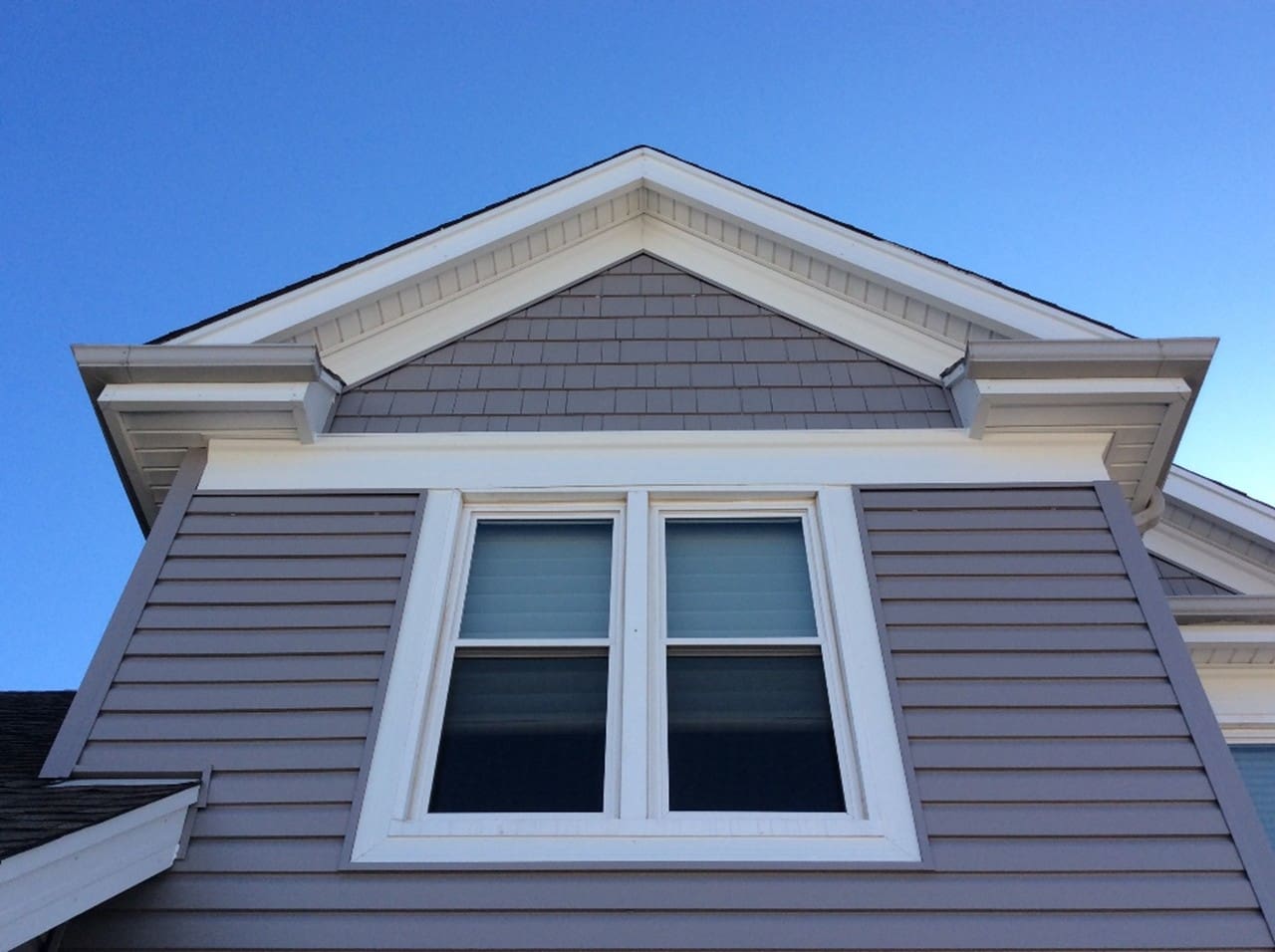


Essential siding terminology includes lap board siding or clapboard siding (horizontal planks), board and batten siding (vertical boards with strips), and shakes (shingle-like). Key components include soffits (under-roof overhang), fascia (trim board at roof edge), J-
channel (trim for edges), and house wrap (moisture barrier).
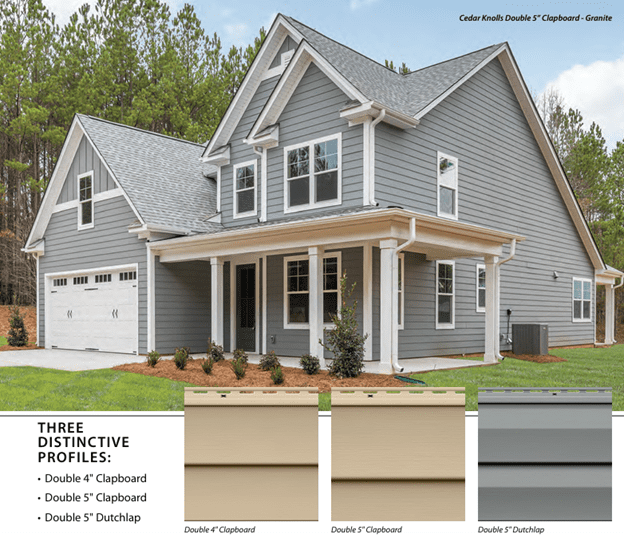
Common Siding Styles and Components
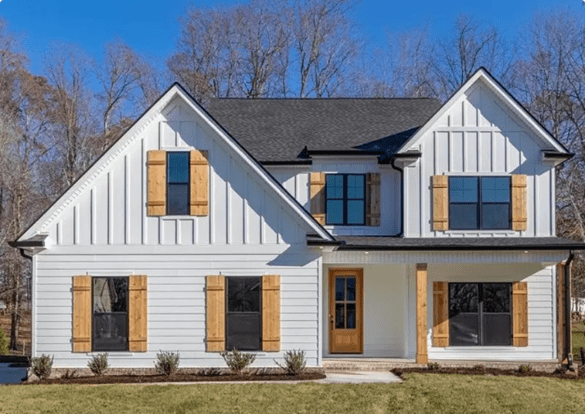
- Board and Batten: Vertical planks with narrow strips (battens) covering the seams often used to achieve a modern farmhouse aesthetic.
- Lap Siding/Clapboard: Classic horizontal boards that overlap to shed water.
- Dutch Lap: Similar to clapboard, but with a slight, decorative notch or concave groove at the top of each board. Each plank looks distinctive, arching out and down.
- Shake: Siding that mimics the look of wood shakes or shingles, offering a rustic texture.
- Vertical Siding Panels: Panels running from top to bottom, often used for accents or modern designs.
Key Siding Terminology & Parts
- Soffit: Installed underneath the roof overhang, it connects the roof edge to the house wall and provides attic ventilation. The soffit can be vented and solid to encourage airflow while protecting your home.
- Fascia: The trim board behind the gutters that caps the rafters and protects the roof edge holding the gutters in place.
- J-Channel: A receptor channel for vinyl siding edges around windows, doors, and corners, allowing for expansion and contraction.
- House Wrap: A breathable, waterproof barrier installed over the sheathing to prevent water infiltration.
- Buttlock:The bottom edge of a vinyl siding panel that locks into the piece below it.
- Course: A single, horizontal row of siding.
- Gable: The triangular portion of a wall between the edges of a dual-pitched roof.
- Frieze Board: A horizontal trim board that fills the gap between the top of the siding and the soffit.
- Backerboard:Material installed over studs to create a flat, solid surface for siding attachment.
- Blind Nail: A technique where nails are hidden, leaving a cleaner, uninterrupted finish.
- Corner Posts: Corner posts are used to provide a finished edge at the inside or outside corner. The siding from adjoining walls fits neatly into the inside or outside corner post channels.