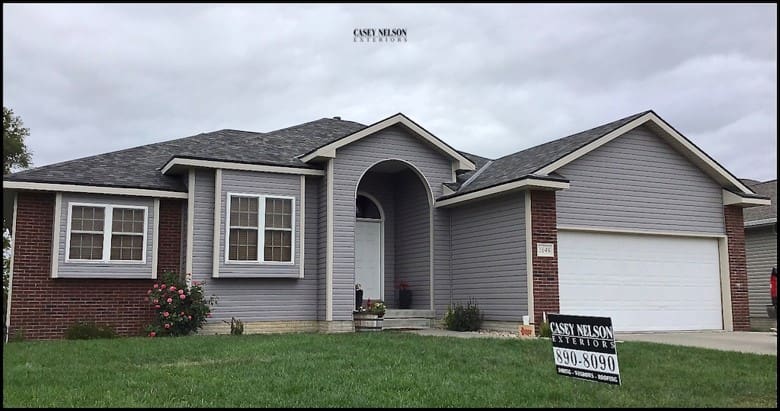



Here are the best practices for cleaning mold off the four most common types of siding that we install at Casey Nelson Exteriors:
1. Vinyl Siding – Norandex and Mastic
Preventing mold on Norandex vinyl siding relies on controlling moisture sources, managing nearby vegetation, and performing regular maintenance. Because high-quality vinyl siding hangs on the wall to allow for thermal expansion, trapped moisture behind the panels and organic growth on the surface are the primary causes of mold.
Preventative Maintenance
- Moisture Control
- Direct sprinklers away: Constant dampness provides a breeding ground for mold spores. Ensure sprinkler heads are angled so water hits the lawn, not the siding or the wood framework behind it.
- Check exterior venting: Ensure that dryer vents, bathroom exhausts, and kitchen hoods vent directly to the outside and do not dump warm, moist air directly beneath the siding.
- Landscaping and Airflow
- Trim trees and shrubs: Cut back bushes, climbing vines, and tree branches that physically touch the siding. This promotes natural airflow and allows sunlight to dry out north-facing or shaded walls.
- Avoid piling mulch against the foundation: Keep mulch beds and soil several inches below the bottom edge of the siding to allow the wall to “breathe.”
Cleaning and Maintenance
- Wash annually: Clean the siding at least once a year using a standard garden hose and a soft-bristled brush to remove accumulated dirt, pollen, and mildew spores.
- Choose safe cleaners: Norandex recommends avoiding harsh, abrasive cleaners. For stubborn organic stains, use a mild mixture of 30% white vinegar and 70% water (follow the Norandex Vinyl Siding Care & Maintenance guidelines for specific stain types).
- Application: Spray the solution onto the siding from the bottom up to prevent streaking, and let it sit for 5 to 10 minutes without letting it dry.
- Removal Tool: Use a soft-bristled brush on a long extension pole to gently scrub away the mold.
- Rinsing: Rinse thoroughly with a garden hose.
2. James Hardie (Fiber Cement) Siding
Fiber cement is rigid and durable, but high-pressure water or harsh chemicals can strip its factory-applied paint or damage the cement surface. To prevent mold on James Hardie siding, eliminate moisture buildup and remove organic debris. Wash the siding annually using a standard garden hose and soft-bristled brush. Never use a pressure washer, and keep surrounding bushes and trees trimmed so no branches scrape or rest against the exterior walls.
Preventive Maintenance
- Inspect Caulk & Flashing: Moisture trapped behind siding feeds mold. Regularly check caulk around windows, doors, and trim, replacing cracked seals immediately.
- Clear Organic Debris: Dirt, pollen, and leaves clinging to the cement board retain water. Wash your siding down at least once every 6 to 12 months.
- Protect the North Side: Shaded, north-facing walls or areas with poor sun exposure are the most common places for mold and mildew to develop. Pay special attention to washing and inspecting these zones.
- Optimize Drainage: Ensure your home’s gutter systems are clear, directing water runoff away from the walls and foundation.
Removing Existing Mold
If you already notice mold or mildew, it needs to be sanitized immediately:
- Cleaning Solution: Use a solution of mild dish soap and warm water, or a mixture of 30% vinegar and 70% water. Avoid harsh chemicals like bleach or ammonia, which can damage the siding’s finish. Use a manufacturer-approved commercial cleaner like Jomax, Mold Armor, or Mildew Check.
- Application & Scrubbing: Apply with a soft-bristled brush or a soft-cloth sponge. Gently scrub the affected areas in a circular motion.
- Rinsing: Rinse thoroughly with a standard garden hose and a nozzle. Never use a high-pressure washer on fiber cement siding, as high pressure can erode the surface and ruin the finish.
3. LP SmartSide (Engineered Wood) Siding
Engineered wood siding features a resin-saturated, wood-strand core protected by an overlay and finish. While tough, it is still wood-based and vulnerable to moisture penetration if protective coatings are compromised. Preventing mold on LP SmartSide siding requires aggressive moisture management and routine maintenance. Follow manufacturer guidelines: never let lawn sprinklers hit the walls, maintain a 6-inch ground clearance, trim all foliage back by at least one foot, and gently wash the panels with mild soap annually.
Preventative Maintenance
- Moisture is the primary catalyst for mold and mildew. Ensure that roof gutters and downspouts effectively divert water away from the foundation. Check that exterior hose bibs, electrical boxes, and light fixtures are properly caulked and sealed.
- Sprinklers: Never allow lawn sprinklers to spray directly onto your siding.
- Landscaping: Maintain a 6-inch clearance between the bottom of your siding and the soil or mulch. Ensure that garden mulch doesn’t build up to compromise this clearance.
Removing Existing Mold Inspect your siding visually at least once a year.
- Washing: For areas with light mold or mildew, gently wash the siding with a solution of 5 parts water to 1-part concentrated cleaner/degreaser, or a mix of 3 parts water and 1-part white vinegar.
- Application: Use a soft-bristled brush or sponge.
- Rinsing: Rinse immediately with a standard garden hose. Never use a pressure washer on LP SmartSide, as high pressure can force water behind the siding and cause damage.
Painting and Caulking
Your paint and caulk act as the primary defense against moisture intrusion.
- Caulking: Routinely check for gaps or failed caulking around joints, windows, and door casings. Replace any missing or damaged caulking using a high-quality sealant.
- Repainting: Ensure you repaint the siding before the existing paint coat fails or degrades.
4. Steel Siding – EdCo Steel
Because EDCO steel siding is an inorganic material, mold cannot grow on or consume the steel itself. However, surface mold and mildew can still feed on trapped dirt or pollen. Prevention relies on reducing shade, improving airflow, and performing regular, low-pressure cleanings using mild detergents or specialized metal cleaners. Steel siding is resilient and fire-resistant, but harsh chemicals can cause corrosion if left on bare metal, and high pressure can dent or scratch the protective finish.
Preventative Maintenance
- Trim Vegetation: Keep bushes, tree branches, and tall shrubs trimmed back at least 2 to 3 feet from your exterior walls. This increases direct sunlight and improves air circulation, keeping the siding dry.
- Adjust Sprinklers: Point your lawn and garden sprinklers away from the house. Constant moisture from hard water or well water promotes algae growth and traps dirt.
- Clear Gutters and Downspouts: Ensure gutters are free of debris so that water does not overflow and run down the face of your siding.
- Extend Downspouts: Make sure downspout extensions direct water at least 4 to 6 feet away from your foundation and siding.
Routine Maintenance & Cleaning
- Annual Washing: Wash your steel siding at least once a year to remove dirt, pollen, and debris that mold spores feed on.
- Cleaning Method: Wash from the bottom up and rinse from the top down. Use a garden hose with a soft-bristled brush or a long-handled car wash brush.
- Safe Cleaners: Avoid harsh abrasives or corrosive chemicals.
- Cleaning Solution: For general dirt, use a mixture of mild soap and warm water. For tougher organic stains (mold/algae), spot-clean using a solution of 1-part white vinegar to 3 parts water, or use biodegradable cleaners like Simple Green Oxy Solve House and Siding Cleaner.
- Application & Scrubbing: Apply with a soft brush or cloth to prevent scratching the painted finish.
- Rinsing: Rinse thoroughly with clean water from a garden hose.
- What to Avoid
- Avoid Pressure Washers: High-pressure water can strip the proprietary finishes on EDCO steel siding or drive water behind the panels, damaging the moisture barrier.
- Avoid Bleach: Prolonged use of heavy bleach or corrosive products can cause oxidation and dull the finish of metal panels.