


Windows are a valuable part of your home. Windows provide not only a view to the outside world but also comfort, energy efficiency, style and safety. Knowing the parts of a window and the terminology surrounding windows will help you, as the homeowner, be more knowledgeable communicating what it is that you are wanting for your home.
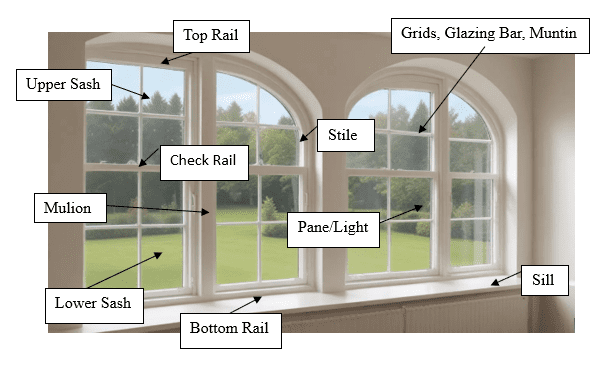
Key window parts include the frame (jambs, head, sill) that secures it to the wall, and the sash (moveable or fixed framework) that holds the glass panes (or glazing). Essential hardware includes locks, handles, and hinges, while muntins/grids divide glass, and casing/trim covers gaps between the window and wall.
The Main Structure (Frame)
- Frame: The outer, stationary structure that holds the entire window assembly in place.
- Jamb: The main vertical sides of the frame.
- Head: The top horizontal piece of the frame.
- Sill: The main horizontal bottom piece of the frame, designed to shed water.
- Side Jamb/Jamb Liner: Vertical components, sometimes with liners that cover the space between the frame and wall.
The Moveable Part (Sash)
- Sash: The part of the window that holds the glass and moves (or stays fixed) within the frame.
- Stile: The vertical pieces of the sash frame.
Rail: The horizontal pieces of the sash frame.
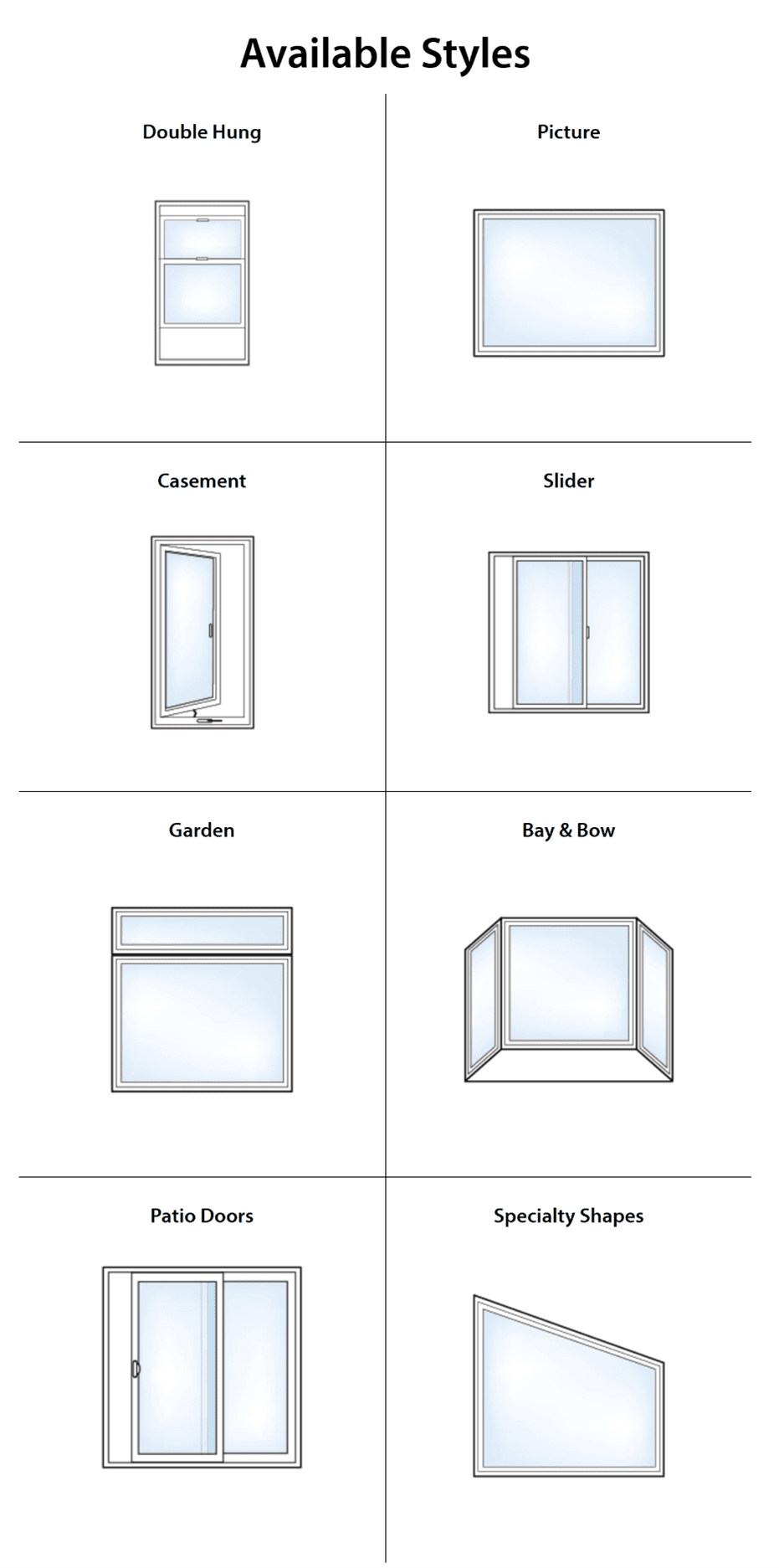
Single Hung: Classic style with a fixed top sash and movable lower sash.
Double Hung: Traditional design where both top and bottom sashes move, allowing for superior ventilation.
Sliding (Slider): Horizontal gliding windows, ideal for modern, wide views.
Casement: Hinged on one side, these swing outward for maximum ventilation.
Awning: Top-hinged windows that open outward from the bottom, perfect for rain protection.
Picture Window: Fixed, non-operating windows designed for maximum light and views.
Bay/Bow: Protruding windows designed to create a mini-greenhouse or shelf.
Specialty Shapes:
Customizable shapes to match unique home designs.
Hopper: Bottom-hinged windows, typically used for basement ventilation.